HOME
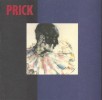
PRICK
LUCKY PIERRE
FEAR OF BLUE
THE STRUGGLES
MASTER CHERRY
MY STARS
THE PEPPERMEN
BROKEN MAN
THE PYRAMID CLUB
( SIC )
RELATED PROJECTS >
CATS ON HOLIDAY
HOT TIN ROOF
THE LEISURE SET
BUTTERFIELD 8
BECKY BARKSDALE
MONITORS
BRIAN MCMAHON
EXOTIC BIRDS
SYSTEM 56
THE HOLY COWS
BIOGRAPHY
SONGS
RELEASES
PRESS/INTERVIEWS
PHOTOS
PROMO/PRESS KITS
SHOWS
M.E.A.T. Magazine
ME.A.T. Magazine, Issue 58, Spetember/October 1998
By Adrian Bromley
Transcribed by The Happy Slave
It just so happens that PRICK's singer/songwriter Kevin McMahon is good buddies with Trent Reznor, the outspoken and chaotic ringleader of Nine Inch Nails.
Now some people might associate Prick's self-titled debut – a mixture of metal, rock and industrial -- as a poor man's rip-off of Nine Inch Nails due to the fact that the band is on Reznor's Nothing label, and McMahon used to play with Reznor in the band Lucky Pierre back in Cleveland. Hell, Reznor even had a hand in producing the album. But by association does that leave Prick unfairly open to criticism? Responds McMahon, "Being affiliated with Trent is a positive as well as negative thing because a lot of people
don't like NIN. People might say this is not a real situation because 'he's friends with Trent.'"
As Prick took form, McMahon had the task of finding a label to call his project home. The end result was Nothing. "I did talk with some major labels that expressed interest," McMahon reveals, but in searching for a label he was trying to find something that would be both familiar and allow his creative freedom not to be jeopardized, something he eventually discovered with Nothing/Interscope (distributed by Warner Canada). "Being with Nothing is kind of like I won't get fucked with," he concedes.
Aside from any associations, the main thing for Prick to overcome is the comparisons to other bands. States McMahon, "I'm learning to tolerate them. I don't think we are going to end up being stereotyped."
Prick have developed a sound and technique that is open to a lot of interpretation, yet provides the listener with an abundance of sound that, as McMahon describes, will make the music be seen as "unsure and curious at first."
For the debut album McMahon managed to bring together several songs -- some as old as eight years -- plus new ones, and incorporate them into a project that covers their versatility. "I guess some songs have a longer gestation period. When I was putting this album together I was trying to find songs that were the extreme from each other. In the end you have to be confident and sure of the results."
Describing the music, he says, "Hopefully there is enough that comes with the name, and the anonymity of where I come from, that they'll put on the record and listen to it as something unique. Hopefully it will take them to a place where their imagination will sparkle and make things get questioned."
The method of finding that unique sound has been a soul searching process for McMahon, a discovery that he notes as worth the hard work. "I try to incorporate a lot of different sounds -- to bring in things that aren't always from one perspective. Musically, I'm trying to speak from a subjective
as well as an objective voice. Sometimes music has blinders on it for the sake of focus, marketing or accessibility, yet I've always played music that has always taken me farther out."
Is Prick, therefore, avoiding commercialism? States McMahon, "I'm not concerned with that because it has gotten to a point to do so. We just released the first video, and the response has been good so far. I'm thinking more now of the album taking off rather than avoiding commercialism."